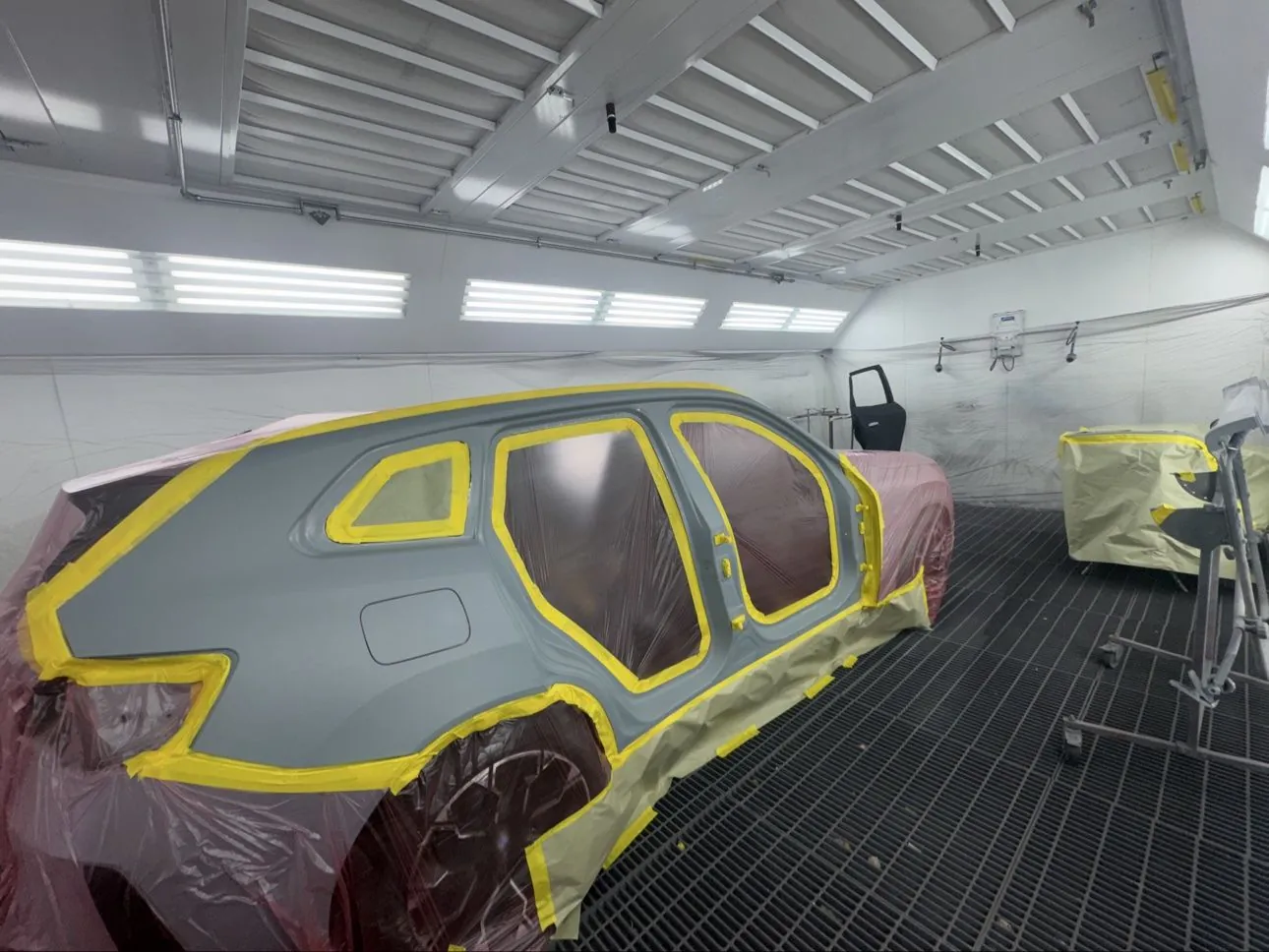
After a harder hit, "frame damage" is the phrase customers in Milpitas and San Jose worry about most. The frame or unibody is the structure everything else attaches to: suspension, doors, panels, and safety systems. Serious damage is not always visible, and minor-looking damage is not always serious. Here is how to tell the difference.
The Quick Answer
Frame damage is serious when the structure has bent, twisted, or crushed in a way that changes the car’s dimensions, affects how it drives, or weakens the parts designed to absorb a future impact. Uneven panel gaps, a pull to one side, and doors that no longer close cleanly are warning signs, but the real answer comes from measuring the structure against the carmaker’s specifications.
First, Which Structure Does Your Car Have?
Most cars, crossovers, and SUVs today are unibody: the body and frame are one welded structure, with bolt-on subframes that carry the engine and suspension. Most full-size trucks and some larger SUVs are body-on-frame: a separate steel frame with the body mounted on top.
The distinction matters. A bent bolt-on subframe can often be replaced. Damage to a unibody rail, apron, or pillar is built into the body itself, so it has to be straightened or sectioned following the carmaker’s procedure. Neither type is automatically a total loss.
Signs You Can See or Feel
- Panel gaps that do not match: A hood, door, or trunk gap that is wide on one side and tight on the other, or panels that sit visibly higher or lower than the panel next to them.
- Doors, hood, or trunk that are hard to open, close, or latch: The openings have changed shape, even slightly.
- The car pulls, drifts, or the steering wheel sits off-center: Structural movement can change suspension mounting points and wheel alignment.
- Uneven or rapid tire wear: A sign the wheels no longer point where they should, though suspension damage can cause this too.
- Visible bends, kinks, or cracks in rails or underbody parts: Metal folded rather than smoothly shaped, or paint cracked off a rail, is a clue the metal moved.
One sign alone does not prove the structure is bent. A door can be hard to close because the door or its hinges are damaged. That is why the next step matters.
Signs You Cannot See
Modern structures are designed to crush in controlled areas, called crumple zones, and that damage can hide behind bumpers and trim. A car can look straight and still measure out of specification underneath. The opposite happens too: heavy cosmetic damage with the structure untouched.
Hidden damage matters for two reasons. A rail that has already crushed once will not absorb the next impact as designed. And everything mounted to that structure, including suspension points and driver-assistance sensors, now sits in a slightly different place.
How a Shop Tells for Sure
- Visual inspection, including on a lift: We look at rails, aprons, subframes, and suspension points, and check for kinks, cracks, and shifted fasteners.
- Teardown when needed: Bumpers and trim often have to come off before the structure can be seen and measured honestly.
- Computerized measuring: The structure is measured at specific points and compared with the carmaker’s published dimensions. That printout, not an opinion, shows what moved, where, and by how much.
- OEM procedure check: The carmaker’s repair procedure decides whether a part can be straightened, whether it must be sectioned or replaced, and what cannot be heated or pulled. We follow that procedure and document it on your repair order.
Is It Repairable, and What Does It Typically Cost?
Many structurally damaged cars are repaired safely every day. Straightening minor movement, replacing a bolt-on subframe, or sectioning a rail per the carmaker’s procedure are all established repairs. A car tends toward a total loss when structural repair plus all other damage approaches its actual value, or when the carmaker prohibits repair of the damaged part.
As a typical, approximate guide only: a measuring inspection is often part of the estimate process after teardown, minor structural correction can run from the high hundreds into the low thousands of dollars, and sectioning or replacing structural parts commonly runs several thousand dollars and up, before paint and related work. Timeline follows the same pattern: measuring adds about a day, while structural repair typically adds several days to more than a week to a job, depending on parts and insurance approval. These ranges are for planning, not a quote. Your car needs its own measurement and estimate.
Should You Drive It?
If the car pulls noticeably, the steering wheel is off-center, a wheel looks angled, fluid is leaking, or a door will not latch, do not keep driving it around the Bay Area. Have it towed or inspected first. If none of those are present, driving it carefully to the shop for an inspection is usually reasonable.
The Bottom Line for Milpitas and San Jose Drivers
Do not panic at the words "frame damage," and do not dismiss them either. Ask for the measurement printout and the carmaker’s procedure, not just a verbal opinion. At Crown Auto Body, at 1365 Minnis Cir in Milpitas, that measuring and documentation are part of the job, and we will walk you through what we found before any structural work starts. Questions? Call or text us: we will give you a straight answer.